Shenzhen Southern Machinery - SMT / THT equipment design and manufacturing since 2011
Southern Machinery Southern MachinerySMT / THT equipment and feeders
Tray feeding - 40-tray magazine, no manual reload

STP1001 Tray Feeder
for Automated Odd-Form PCB Assembly

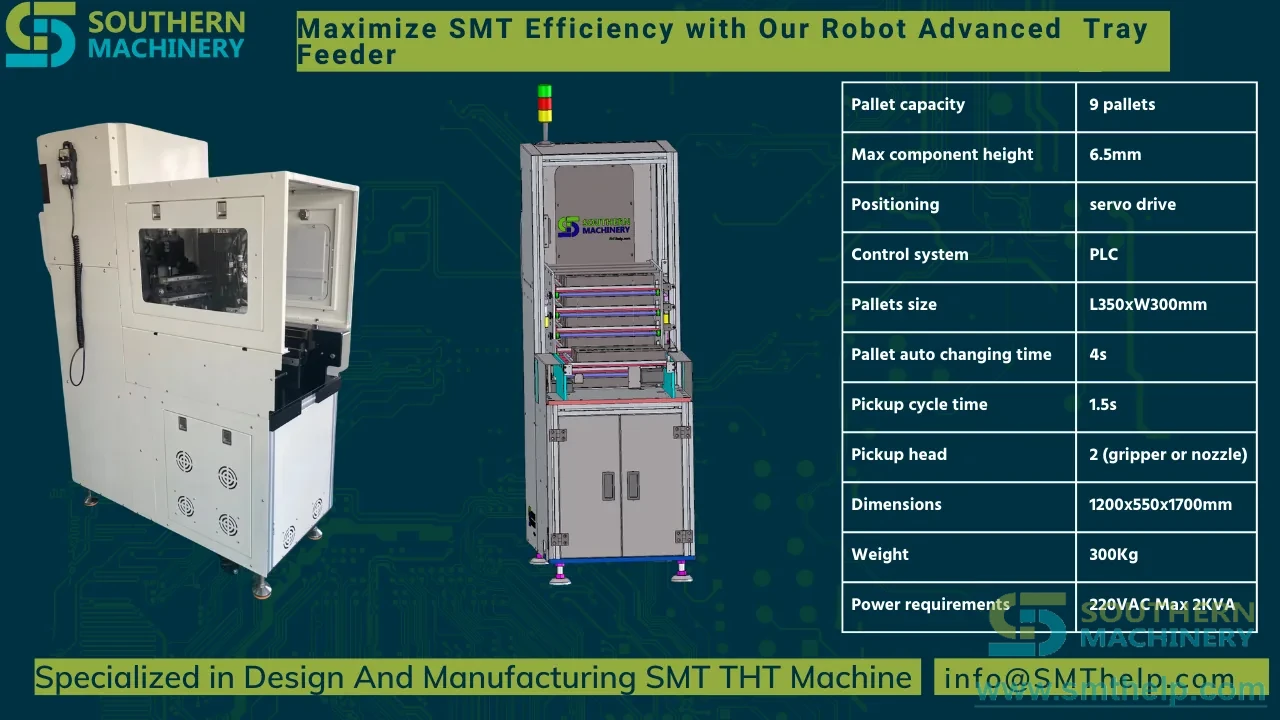
The STP1001 takes blister-tray transformers, relays, hardware, memory module sockets and large capacitors out of an operator's hands. A 40-tray magazine, a servo-driven screw-rod stacker, and a conveyor belt feed the host mounter continuously, with a 3 s feed and +/- 1 mm precision.

STF1003 tube feeder photographed against a plain background, stacked tube magazine on the left and control panel on the rightThree-dimensional render of the tube feeder showing its full length and the control box at the far endTube feeder on the factory floor with the track along the top and the recovery box underneathTwo complete tube feeders side by side on stands, both tube magazines raisedTube feeder installed on a YAMAHA placement machine with the feeder bank in the foreground
Panasonic CM602, JUKI, YAMAHA, Mirae
Success cases
IO or self-control
Communication
0.4 - 0.6 MPa
Air supply
8-core 16 mm aviation plug
Upper computer connection
ISO 9001CESince 2011
Why tray feeding

The tray is the packaging high-value parts already come in

Transformers, relays, large capacitors and DIMM connectors arrive in blister trays because the tray protects the leads and the body. That packaging is already bought and already on your receiving dock.

01

The labour is the cost, not the tray

Tray-fed odd-form parts are usually placed by hand or with a low-throughput feeder an operator has to keep reloading. Every tray that runs out is a machine stop, and every stop is either a yield problem or a missed shift target. The STP1001 puts 40 small-part trays in one magazine so the operator can stay on quality, not on restocking.

02

A 40-tray magazine keeps the machine fed

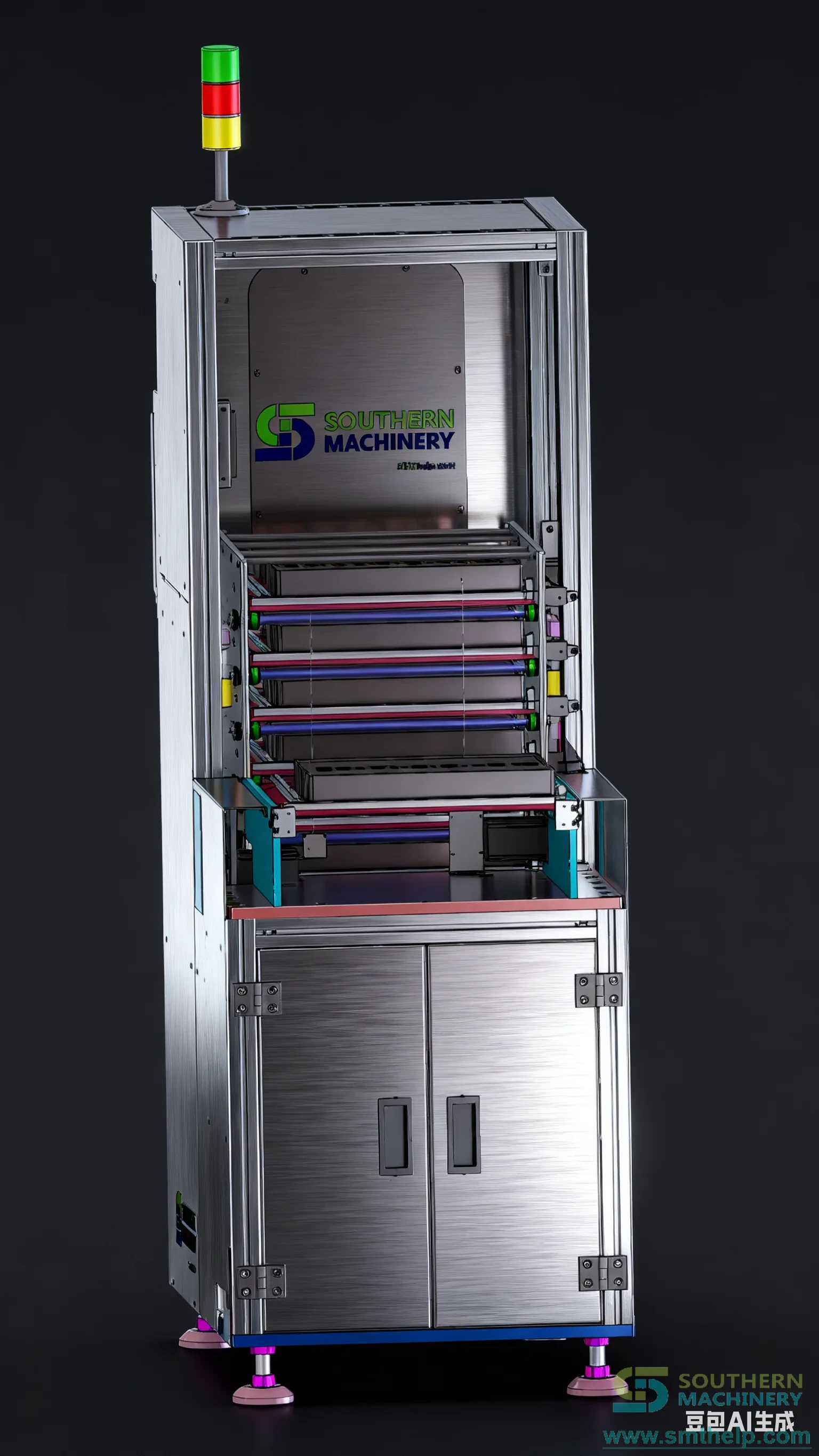
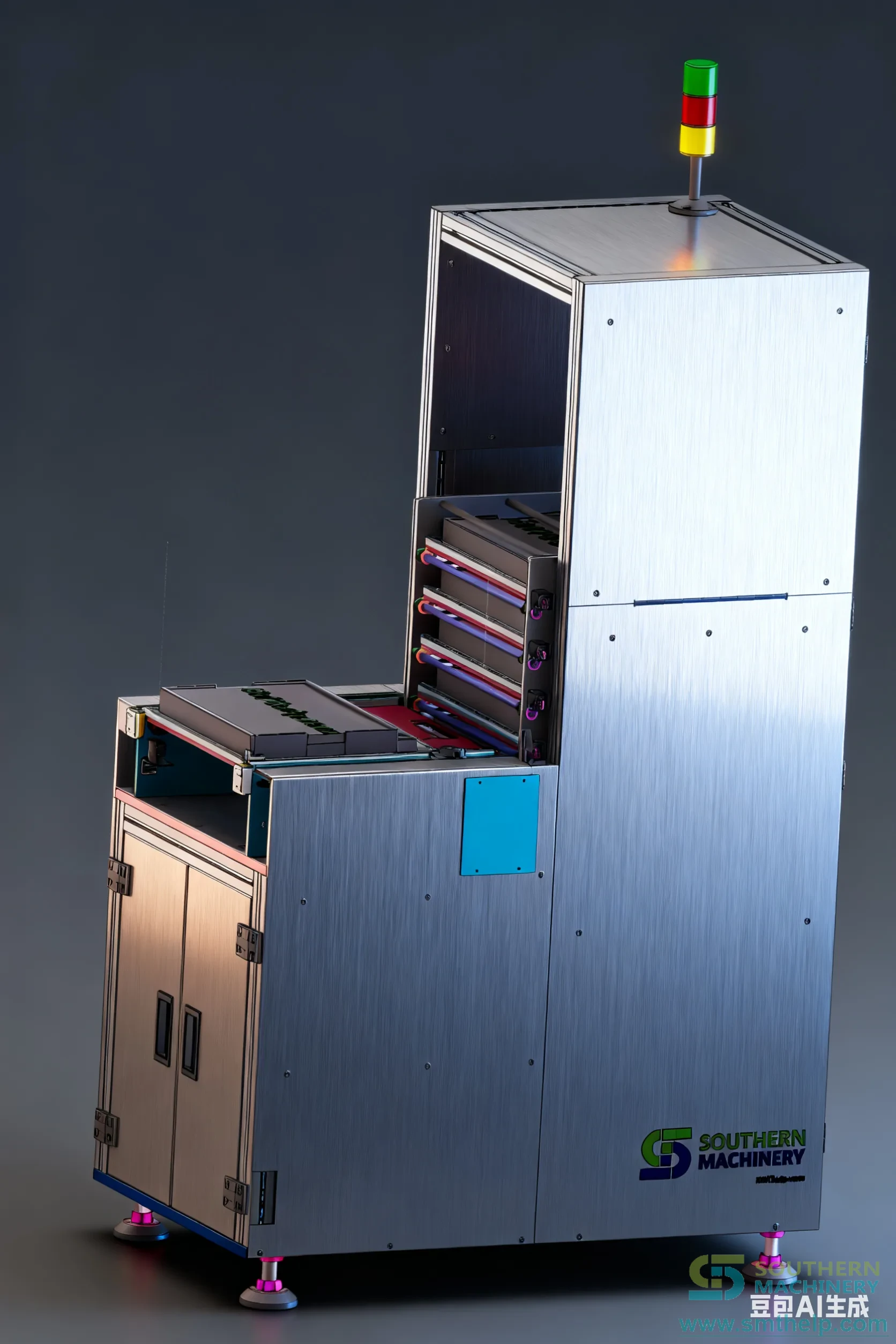
The lifting magazine holds up to 40 trays of parts under 10 mm tall, or 20 trays of taller parts. A motor-driven screw rod lifts the stack one tray at a time. The conveyor belt pulls the active tray under the pick point and returns the empty tray to the magazine for collection. No operator walks back to the rack between boards.

03

One feeder across several part families

The same STP1001 feeds transformers, relays, hardware parts, memory module sockets and large capacitors in the 3 x 3 x 3 mm to 50 x 50 x 50 mm size band. Switching the part is a matter of swapping the loaded tray. The host mounter sees the same component-in-position signal either through the 8-core aviation plug or by self-control.

How it feeds

A lifting magazine, a belt, and a pick point

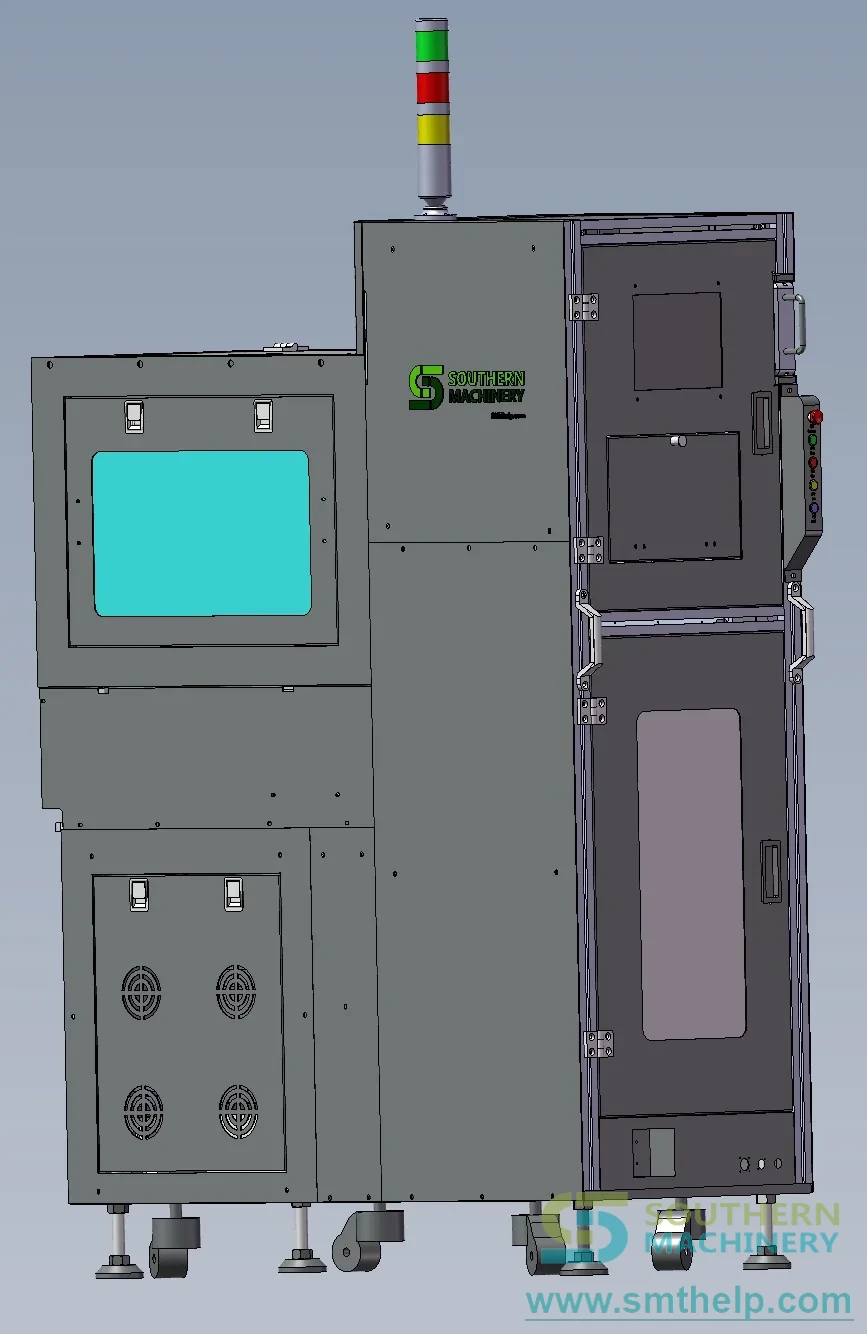
Servo-driven screw rod lifts a tray out of the magazine, a belt positions it under the pick point, the host takes the component.

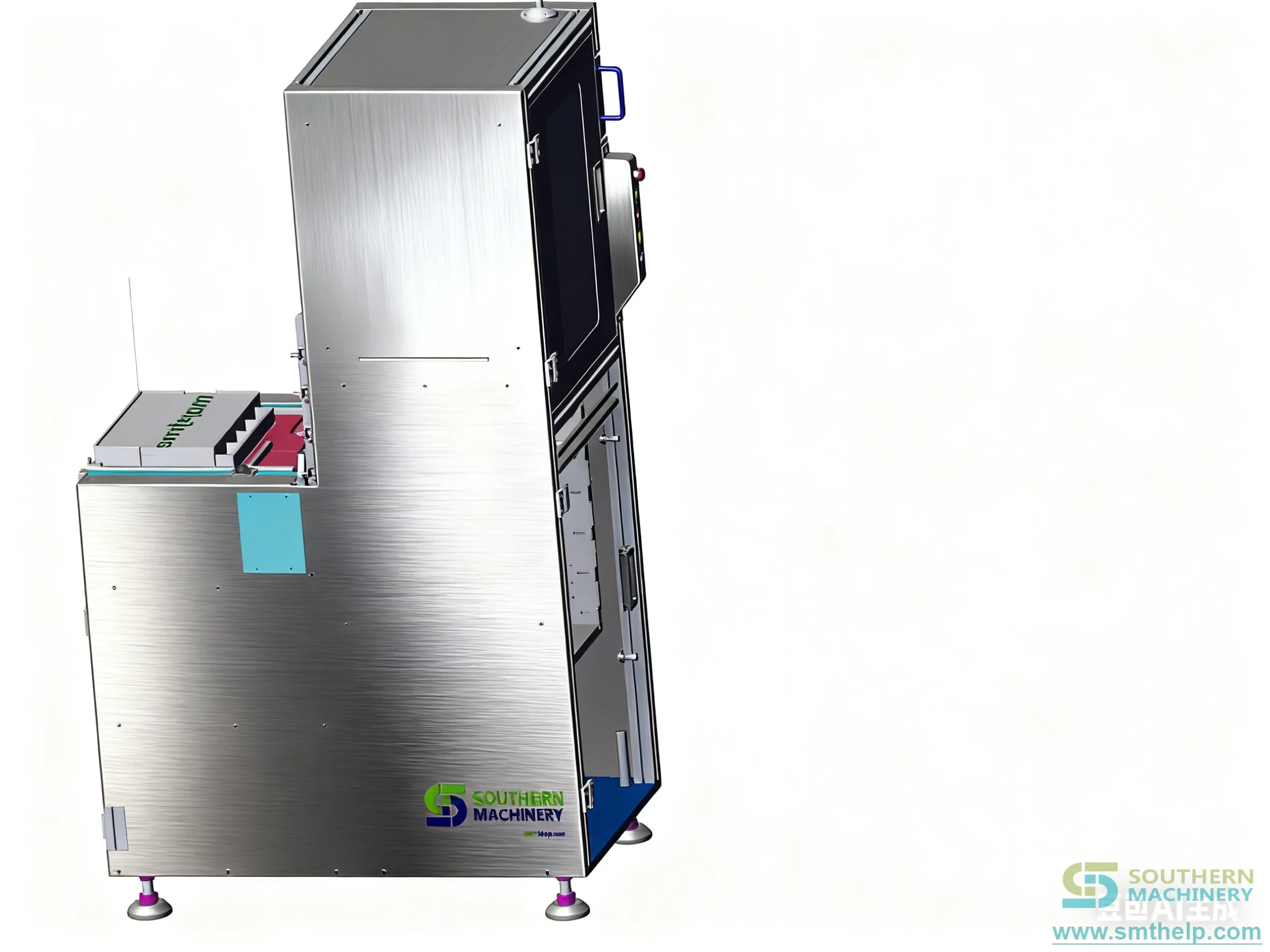
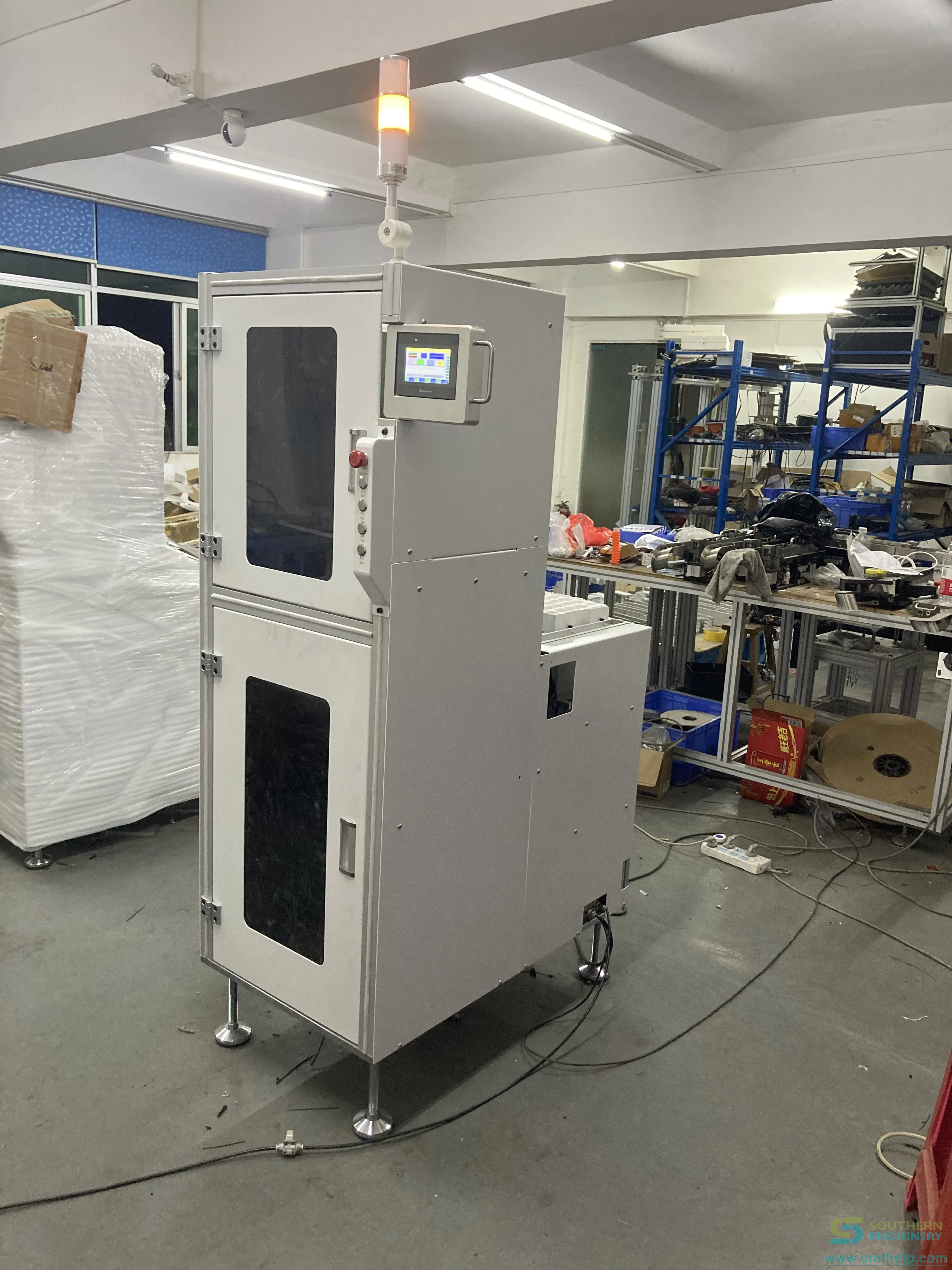
The STP1001 photographed against a plain background with the lifting magazine on the left
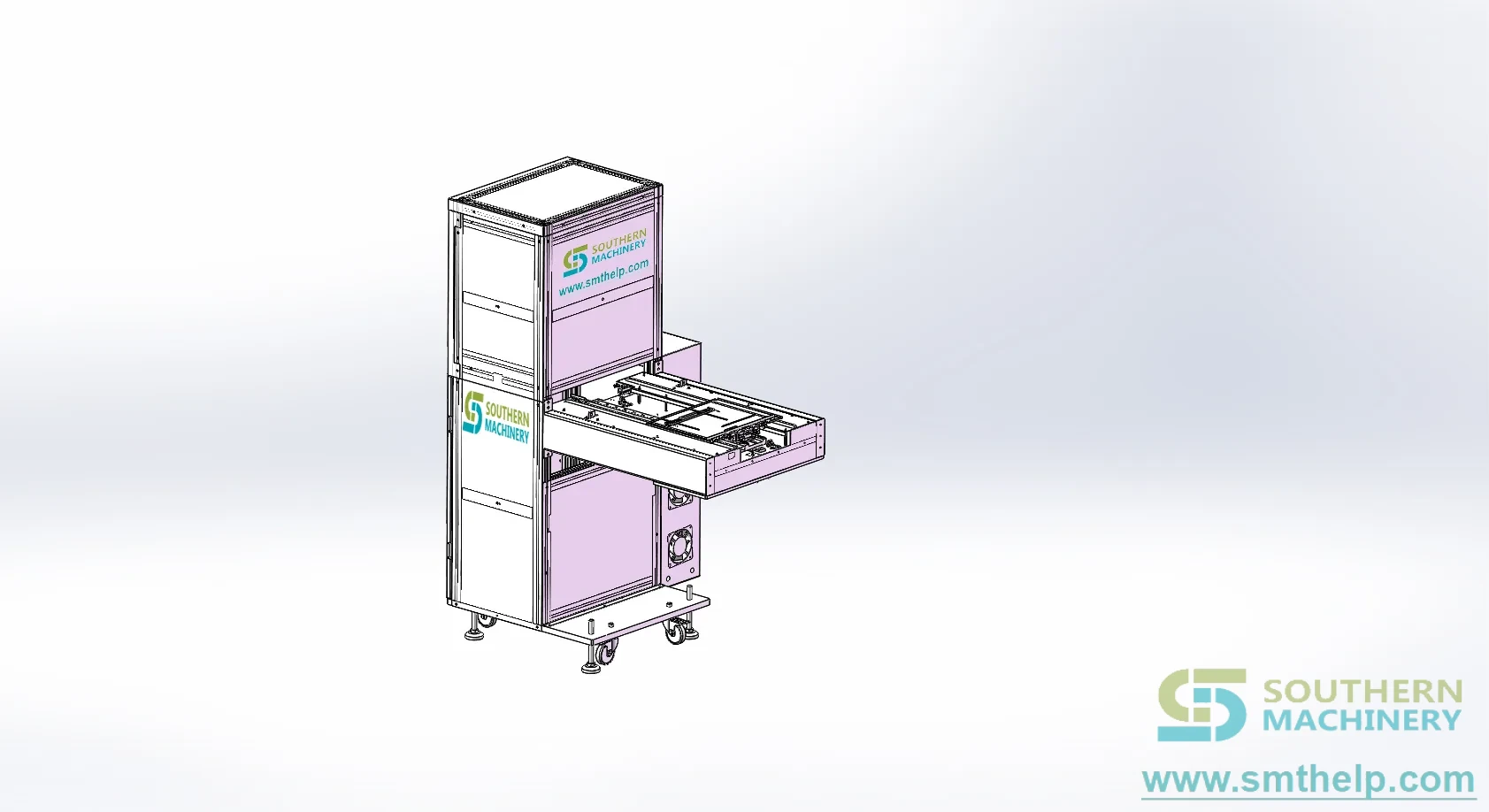
STP1001 at three-quarter angle, showing the lifting magazine on top and the conveyor section below.
01

Load the tray stack

An operator loads up to 40 trays of <10 mm-tall components into the lifting magazine. The motor-driven screw rod supports the stack.

02

Lift one tray into the feed position

The 400 W lifting servo raises the stack until the top tray is level with the conveyor belt.

03

Position the active tray

The 100 W conveying servo moves the conveyor belt so the chosen component pocket lines up under the pick point.

04

Pick from the tray

The host mounter picks the component. The STP1001 asserts component-in-position on the IO line so the mounter knows the pick is valid.

05

Advance to the next pocket

After the pick, the belt indexes to the next component pocket in the same tray. When the tray is empty, it is returned to the magazine.

06

Lower the stack and repeat

The screw rod drops the stack one tray level, and the next tray moves into position. The cycle restarts.

07

Continue without manual reload

The 40-tray magazine and the 3 s feed rate mean the mounter keeps running without the operator returning to the rack for hundreds of boards.

Sequence assembled from the V03 catalog page and the operation manual. The cycle repeats without manual reload until the magazine runs low.

LOAD
PUSH
PRESENT
Lift the stack - belt-position the tray - present the component - return the empty tray
Platform fit

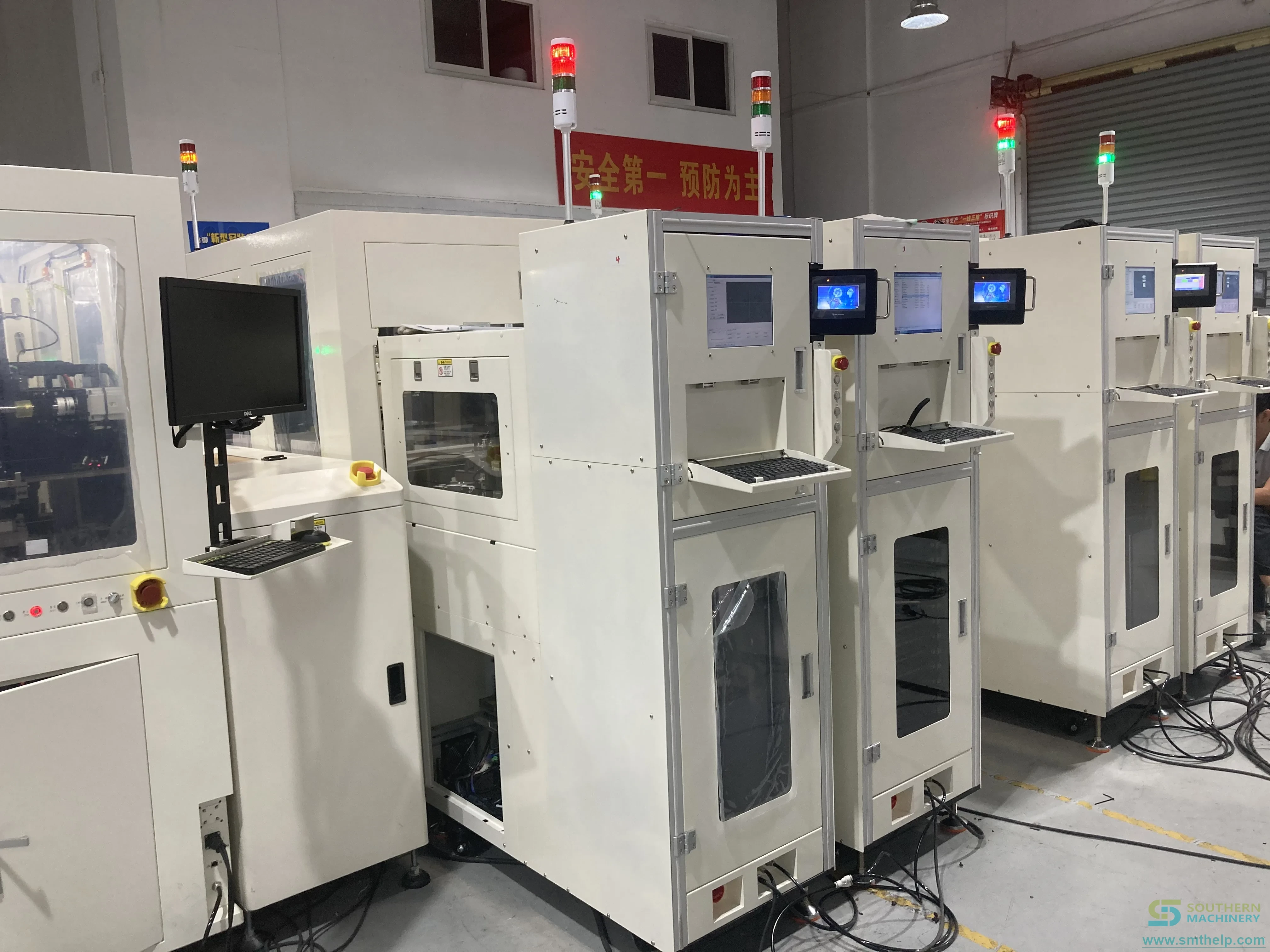
Mounts to four builders of odd-form placement

The STP1001 is verified on Panasonic CM602, JUKI, YAMAHA and Mirae odd-form machines.

Source: V03 catalog page and STP1001 FABE sales note
Panasonic CM602, JUKI, YAMAHA, Mirae

Odd-form machines from four builders

The product table lists installations on Panasonic CM602, JUKI, YAMAHA and Mirae odd-form machines, in each case working alongside bowl feeders and radial tape feeders. The STP1001 fits on the existing feeder plate via the positioning key - no custom bracket is needed for the standard plate size.

IO or self-control

Any SMT mounter, IO or self-control

The 8-core 16 mm aviation plug connects to any mounter that exposes an IO feeder interface. When the host has no spare interface, the STP1001 runs in self-control mode - the feeder cycles on its own and the mounter picks at its own pace. Either way the component-in-position signal is the same.

Tray + bowl + radial

Hybrid lines with bowl and radial feeders

On a mixed board, the tray feeder handles the heavy leaded parts while a bowl feeder handles the small odd-form parts and a radial tape feeder handles the through-hole parts. The tray feeder integrates with both - the same IO handshake works for all three.

Specification

Full specification, sourced

All 32 rows are reproduced from the supplied documents and each row names the document it was read from. Where a document does not state a parameter, the row says so rather than borrowing a value from another model.

Source: STP1001 spec sheet (V03 catalog), TRAF1000 spec sheet, and the STP1001 FABE sales note
Parameter Specification Document it was read from What it means on the line
Model codeSTP1001V03 catalog page and FABE sales noteThe code the catalog page, the FABE note and the YouTube board all use.
Machine typeAutomated tray feeder for SMT mounters and odd-form placement machinesV03 catalog pageIt is built for tray-fed parts, not for tubes or sticks.
Overall dimensions (L x W x H)1160 x 790 x 1530 mmV03 catalog page and TRAF1000 spec sheetFits in a standard odd-form bay; the picker variant is heavier and taller.
Weight75 kgV03 catalog page and TRAF1000 spec sheetTwo-person lift, no crane needed for install.
Material size3 x 3 x 3 mm to 50 x 50 x 50 mmV03 catalog page and TRAF1000 spec sheetCovers SOP chips and small connectors through to large transformers in one feeder.
Material typesTransformers, relays, hardware parts, memory module sockets, large capacitorsV03 catalog pageHeavy leaded odd-form parts - the families blister trays are typically used for.
Blister tray size150 x 150 mm to 200 x 300 mmV03 catalog page and TRAF1000 spec sheetThe PET tray format most EMS factories already receive. The picker variant uses wider trays - see disclosure table.
Blister tray materialPET plastic filmV03 catalog pageThe standard ESD-safe blister tray; no specialty tooling needed.
Maximum load per material tray<=3 kgV03 catalog page and TRAF1000 spec sheetHeavier trays will deflect on the conveyor belt; stay under the 3 kg limit per tray.
Feeding methodTray feedingV03 catalog pageThe conveyor belt presents the tray to the host; the STP1001 does not pick the component itself.
Tray lifting methodLifting and conveying relying on motor and screw rodV03 catalog pageServo-driven, so the lift position is repeatable after every tray change.
Tray conveying methodMoving the tray back and forth through the conveyor beltV03 catalog pageTwo-direction belt gives the pocket-search and the empty-tray return on the same axis.
Fixing methodPositioning key and clamping block; other fixing structures supportedV03 catalog pageKeys into the existing feeder plate, so the position repeats after a swap.
Empty tray collection methodConveying through the belt, sending empty trays to the lifting platformV03 catalog pageEmpty trays stack back into the magazine for one-pass collection at end of shift.
Tray loading capacity, height <10 mm40 traysV03 catalog page and TRAF1000 spec sheetThe headline capacity figure - the one that drives the line's OEE.
Tray loading capacity, height >10 mm20 traysV03 catalog page and TRAF1000 spec sheetHalf the magazine height, twice the pocket clearance. Pick this row for tall connectors.
Working voltage220 VV03 catalog pageSingle-phase AC. The picker variant uses a different supply - see disclosure table.
Average current / peak current5 A / 8 AV03 catalog pageBudget a 220 V line that can hold 8 A on inrush, not just the 5 A average.
Working air pressure0.4 - 0.6 MPaV03 catalog pageSet the regulator within this band. The picker variant uses a wider band - see disclosure table.
Operation methodTouch screen and button operationV03 catalog pageTouch screen for setup, hard buttons for cycle start / stop / reset.
Upper computer connection8-core 16 mm aviation plugV03 catalog pageStandard industrial plug, so a spare cable is easy to source locally.
Communication methodSupports IO communication, or self-control without communicationV03 catalog pageEither a host handshake or fully standalone - the choice is in the wiring, not the firmware.
Software controlBased on PLCV03 catalog pageA general-purpose industrial PLC; not a proprietary locked board.
Driving methodServo motorV03 catalog page and TRAF1000 spec sheetServo gives the repeatable belt index that the +/- 1 mm precision depends on.
Motor typeLifting 400 W servo, conveying 100 W servo motorV03 catalog page and FABE sales noteTwo-axis servo split. Both motors are common industrial sizes.
Maximum motor speed3000 rpmV03 catalog page and TRAF1000 spec sheetHeadroom above the 3 s feed rate for the index move.
Feeding speed3 s per materialV03 catalog page and FABE sales noteThe time the conveyor takes to present one component pocket under the pick point.
Types of fed materialsCan supply different types of materials from multiple trays, by switching traysV03 catalog pageNo feeder change is needed when the next board uses a different tray - the host just selects the next tray index.
Feeding precision+/- 1 mmV03 catalog page and FABE sales noteThe pick-and-place head can acquire the component on the first attempt; high OEE.
Feeding test (continuous)500 times of continuous feeding without abnormalityV03 catalog page and FABE sales noteVerified by the 500-feeding test on the production unit.
Aging testContinuous operation for 48 hours without abnormalityV03 catalog page and FABE sales noteTwo full days of cycling - what the catalog page calls the aging test.
Verified retrofit installationsPanasonic CM602, JUKI, YAMAHA, MiraeV03 catalog page and FABE sales noteThe four main odd-form machine families - the STP1001 is verified on each.

Full specification

Each row names the document it was read from.

Specification disclosure

Where the supplied documents differ

The STP1001 specification is consistent across the V03 catalog page, the FABE sales note and the earlier TRAF1000 spec sheet. The figures in the spec table above come from those three documents. Differences from the pick-up variant documents are summarised below, because those documents describe a different machine in the same tray-feeder family.

Source: V03 catalog page, TRAF1000 spec sheet, FABE sales note, picker-variant manual, DIMM variant sheet
Parameter STP1001 sheet Picker-variant manual Sibling models Status
Tray dimensions accepted150 x 150 mm to 200 x 300 mmfixed 320 mm wide, length <=410 mm, 15 layersThe picker variant uses a wider tray format and a stack of 15 layers, not the 40 / 20 tray magazine of the STP1001.Clarified by source
Feeder overall dimensions and weight1160 x 790 x 1530 mm, 75 kg1300 x 554 x 1763 mm, 500 kgThe picker variant is a heavier, taller machine with a different footprint, not a size variant of the STP1001.Clarified by source
Power and air supply220 V, 5 A / 8 A, 0.4 - 0.6 MPaAC 220 V, 2000 W, 0.5 - 0.8 MPaThe picker variant uses a larger power supply and a wider air band; the figures for the STP1001 above apply to the tray-only machine.Clarified by source
Tray loading capacity40 trays (<10 mm) or 20 trays (>10 mm)15 layers per stackThe picker variant counts in layers; the STP1001 counts in trays. The two measures are not interchangeable.Clarified by source
Control architecturePLC onlyXD5-60T10-E PLC plus CCD vision and four servo axesThe picker variant adds CCD camera calibration for vision-based pickup; the STP1001 is positioned by the conveyor belt, not by vision.Clarified by source
Pickup capabilityTray feeding onlyrobotic arm with nozzle and gripper pickupThe STP1001 presents the tray to the host mounter; it does not pick the component itself. Pickers with a robotic arm are a different machine in the family.Clarified by source
Component family coverageTransformers, relays, hardware parts, memory module sockets, large capacitorsbroader odd-form mix (picker); DIMM connectors only (DIMM variant)The STP1001 is sized for heavy leaded parts; the picker variants cover a broader range; the DIMM variant is dedicated to DIMM connectors.Clarified by source

"Clarified by source" means the difference is fully explained by a different model in the same family, not by an open question. The picker variant, the operation manual and the DIMM variant describe three other tray feeders in the family; their figures are recorded here so the STP1001 figures above are not confused with theirs.

Throughput

40 small-part trays, 3 s feed, +/- 1 mm

The magazine and the servo cycle set the throughput. The figures below are quoted from the V03 catalog page for the STP1001.

Source: V03 catalog page, TRAF1000 spec sheet
Cycle (s)One operatorTwo operatorsAuto mode
40 trays of components under 10 mm tall12001080960
20 trays of components over 10 mm tall720648576
3 s per material feed360324288

Throughput figures quoted from the V03 catalog page for the STP1001.

Hybrid line options

Pair with the feeder that handles the next part family

The tray feeder handles blister-tray parts. The other feeders in the Southern Machinery range handle the rest of the board.

Source: V03 catalog page and the STP1001 FABE sales note

Tray feeder + bowl feeder

Use the tray feeder for heavy leaded parts and a vibratory bowl feeder for small odd-form parts in the same hybrid line.

Tray feeder + radial tape feeder

Use the tray feeder for odd-form parts and a radial tape feeder for through-hole parts on the same odd-form machine.

Tray + bowl + radial on one mounter

Combine all three on the same odd-form machine to cover the full part mix on a hybrid board.

Installation

Five steps from crate to running

The install sequence below is taken from the STP1001 product sheet and the operation manual. The feeder is delivered crated and pre-commissioned; the on-site work is mounting, supply, host connection and tray teach.

STEP 1

Mount on the feeder plate

Use the positioning key and clamping block to fix the STP1001 to the existing feeder plate. No custom bracket is needed for the standard plate size.

STEP 2

Connect 220 V supply and air

Wire a single-phase 220 V supply rated for 8 A peak. Connect the regulator set to 0.4 - 0.6 MPa to the air inlet. The regulator must hold the band during the magazine lift.

STEP 3

Connect to the host or run standalone

Wire the 8-core 16 mm aviation plug to the host's IO feeder interface, or set the feeder to self-control and let it cycle on its own. Either way the component-in-position signal is the same.

STEP 4

Load the tray stack

Load up to 40 trays of components under 10 mm tall, or 20 trays of taller components. The motor-driven screw rod supports the stack.

STEP 5

Teach tray positions and cycle

Teach the first tray's pocket index on the touch screen. Run an empty-cycle test for 30 minutes before the first board runs production parts.

Mount on the existing feeder plate using the positioning key and clamping block. Connect 220 V supply and 0.4 - 0.6 MPa air (regulator must hold the band). Connect the 8-core 16 mm aviation plug to the host mounter, or run in self-control mode. Load up to 40 trays of components under 10 mm into the lifting magazine. Teach tray positions on the touch screen, then start the cycle. Run a 30-minute empty-cycle test before the first board runs production parts.

Crated and pre-commissioned. On-site work is mounting, supply, host connection and tray teach.

Payback

Payback in months, not years

Below is a worked example. Adjust the inputs to match your line.

Calculate your payback

Machine seconds per board, handling hours released per month, labour saved per year, payback period.

Machine seconds per board
— s
Handling hours released per month
— h / month
Labour saved per year
— USD / year
Payback period
—
Worked example: change any number to match your line.
Videos

STP1001 and tray feeders on the Southern Machinery channel

Six clips from the YouTube board.

Insights

Long-form essays on tray feeding

Eight essays in the established six-step format. Article bodies stay in English.

ARTICLE 01Tray-Mounted Parts Are a Labour Problem Wearing a Packaging Costume

Why the same part arrives on a tray, why that tray becomes a bottleneck, and what the labour really costs.

(Article body in English; the page is translated into 7 languages but the long-form articles stay in English so the original author's voice survives.)

The tray is a packaging choice. The part inside the tray is almost always a part that could not ride a tape reel: a transformer with a heavy magnetic core, a relay with thick pins, a memory module socket with a plastic body that cannot survive a pick-and-place nozzle. The tray exists because the part cannot ride anything else.

The mistake is to treat the tray as the problem. The tray is the part's natural packaging and you already paid for it. The problem is the labour that the tray creates downstream: an operator who swaps one tray for another, who watches the pick point, who catches the empty tray before it falls on the conveyor, who walks back to the rack to fetch the next stack.

Three different costs show up in the same labour slot. The first is the operator's wage. The second is the line stop when the operator is somewhere else. The third is the yield hit when a part is placed in the wrong pocket because the tray was off by one index.

An automated tray feeder collapses all three costs into one capital line. The 40-tray magazine removes the rack walks. The 3 s feed rate removes the line stop. The servo-driven index removes the index error. The capital line pays itself back in the months - not the years - that the wage bill would have cost.

What does not change is the tray. It still arrives on the receiving dock, still holds the parts, still rides the conveyor belt. What changes is that nobody is standing next to it.

This is the lens to use when you read the rest of the article. The STP1001 is not a magic machine. It is a machine that makes the part's existing packaging - the tray - deliverable to the host without an operator in the loop.

ARTICLE 02What Manual Tray Loading Really Costs on a 300-Board Day

A working example of how tray swaps accumulate into lost hours, and where the feeder recovers them.

(Article body in English; the page is translated into 7 languages but the long-form articles stay in English so the original author's voice survives.)

Take a real EMS line running a 300-board day on a heavy leaded odd-form mix. The board carries a transformer, a relay and a large capacitor on the tray-fed side, plus a tape-fed digital IC section. The mounter is a mid-speed odd-form machine.

With manual tray loading, each tray holds about 50 components. The transformer tray runs out in 8 minutes. The relay tray runs out in 12 minutes. The capacitor tray runs out in 15 minutes. So the operator is at the rack, swapping trays, four to six times an hour. The line is running, but the operator is not at the host.

Every time the operator is at the rack, the host is feeding from a single tray and watching for the next pocket. The host never stops. But the average board index moves in 4-6 s windows around the operator's return. That is not a stop; it is a slow creep.

In the same scenario, the STP1001 holds 40 small-part trays at a time. The host feeds continuously for 8 hours of production before an operator sees the rack. The 4-6 s creep disappears. The board index tightens to a 3 s feed rate. The host runs at the speed the host is built for.

The labour side is the easier side to count. Six tray swaps an hour, 30 seconds a swap, 8 hours a day, 26 days a month is 104 hours a month of operator time on tray swaps alone. At a $700 loaded wage, that is $1,520 a month of direct wage, before any value is put on the throughput recovered.

The line above is illustrative. The numbers change with the line. The shape does not: tray swaps are real labour, the labour is measurable, and the STP1001 takes the labour off the floor.

ARTICLE 03How to Tell Whether a Part Belongs in a Tray Feeder

Six quick checks to decide whether a given part should go on a tray feeder, a tube feeder, a bowl feeder or stay manual.

(Article body in English; the page is translated into 7 languages but the long-form articles stay in English so the original author's voice survives.)

Six quick checks decide whether a given part belongs in a tray feeder. None of them is about the feeder. They are all about the part.

Check one: package. If the part ships in a stick tube, you are looking at a tube feeder (see the STF1003 page). If it ships in a blister tray, you are looking at a tray feeder. If it ships loose, you are looking at a bowl feeder. The package decides the feeder family.

Check two: weight. A blister tray can hold up to 3 kg per the STP1001 specification. Above that, the conveyor deflects. If your part weighs more than 3 kg per tray, you need a heavier feeder or a different feed method.

Check three: body. The STP1001 covers 3 x 3 x 3 mm to 50 x 50 x 50 mm. Below the lower bound, the part sticks to the tray film. Above the upper bound, the part will not fit in the magazine pocket. Both cases need a different feeder.

Check four: leads. The STP1001 is a tray feeder; the host does the picking. If your part has leads that bend easily (large SOIC, fine-pitch QFP), the host's pick force will damage the leads. A tube feeder with a clamping tube is safer for those parts.

Check five: quantity per tray. If you only need 5 parts per board, the tray feeder over-serves you; a stick tube or a bowl feeder is cheaper. The STP1001 earns its slot when the part consumption per board is high enough to fill trays quickly.

Check six: host interface. The STP1001 needs an IO handshake or a self-control loop. If your host mounter has neither, you need to budget a small PLC bridge or stay on manual loading.

ARTICLE 04Six Checks Before You Take SOP-Sized Parts Off Manual Placement

Before you automate, check whether the host mounter can pick from a tray at the same speed it picks from tubes.

(Article body in English; the page is translated into 7 languages but the long-form articles stay in English so the original author's voice survives.)

Six checks to run before you commit to a tray feeder for SOP-sized parts. The list is short because SOP chips are the easiest component to mis-route.

Check one: pocket depth. SOP chips are shallow. If the tray's pocket is deeper than the chip, the host's nozzle can press past the chip body and hit the tray floor. Either use a dedicated shallow-pocket tray or pick from a tube.

Check two: pocket-to-pocket pitch. SOP chips sit on a tight pitch. If the tray's pocket pitch is coarser than the part pitch, one pocket holds more than one chip and the host double-picks. Tray manufacturers cut SOP-specific trays for the common pitches (1.27 mm, 1.0 mm, 0.8 mm); use those.

Check three: ESD sensitivity. SOP chips are ESD-sensitive. PET plastic film is acceptable, but the tray must be ESD-safe - look for the ESD mark on the tray. The STP1001 does not introduce any additional ESD path; the tray is the part's ESD protection.

Check four: vision. SOP chips usually need vision alignment. The STP1001 is positioned by the conveyor belt; the host does the vision. Confirm the host mounter's vision can acquire the chip from the orientation the tray presents.

Check five: cycle time. SOP chips are usually picked at high speed. If the host's pick cycle is faster than 3 s, the STP1001 becomes the bottleneck. Either accept the 3 s ceiling or move the SOP chip to a higher-speed feeder.

Check six: cost. SOP chips are cheap; the tray feeder may not pay back on the SOP run alone. It usually pays back on the mixed heavy-leaded run, where the SOP chip rides along on the same line.

ARTICLE 05The 40-Tray Magazine Is the Feature That Actually Buys You Throughput

Why tray count, not tray change time, is the figure that drives the line's OEE.

(Article body in English; the page is translated into 7 languages but the long-form articles stay in English so the original author's voice survives.)

Tray count, not tray change time, is the figure that drives the line's OEE. The argument is short.

Tray change time is the time the feeder takes to swap one tray for the next. In a typical feeder, that is 1-2 s. In the STP1001, the conveyor belt returns the empty tray to the magazine - so the tray change time is the same as the belt index time, which is a fraction of the 3 s feed rate.

Tray count is how many trays the magazine holds without an operator visit. The STP1001 holds 40 trays of small parts. That is 8 hours of production at a 12-parts-per-board, 300-boards-per-day line. The line does not see an operator in that window.

Now do the same math for a feeder that holds 4 trays. That is 48 minutes of production. The operator is at the rack every 48 minutes. The line is in micro-stop mode for the operator walk back to the station.

OEE is a function of availability, performance and quality. Availability is the killer. A feeder that holds 4 trays pushes availability below 95 percent on most lines because the operator is the bottleneck. A feeder that holds 40 trays pushes availability above 99 percent because the operator is decoupled.

The 40-tray magazine is the headline feature because it is the one number that has a direct multiplier effect on OEE. The +/- 1 mm precision matters for quality; the 3 s feed rate matters for performance; but the 40-tray magazine is what buys the availability number.

ARTICLE 06Setting Up a Tray Feeder: The Five Adjustments That Decide Everything

The tray position, the belt speed, the magazine height, the air pressure and the host handshake.

(Article body in English; the page is translated into 7 languages but the long-form articles stay in English so the original author's voice survives.)

Five adjustments decide whether the STP1001 will run cleanly on the line. None of them is complicated. All of them are easy to skip.

Adjustment one: tray position on the belt. The first pocket in the tray must line up under the pick point. Teach the pocket index on the touch screen before the first tray runs. If the index is off by one pocket, every pick is wrong.

Adjustment two: belt speed. The 3 s feed rate is the nominal speed, but the conveyor servo will run faster if you ask it to. Do not ask it to - the index will overshoot and the pick will fail. Stay at the default 3 s.

Adjustment three: magazine height. The 40-tray magazine is sized for small parts. If you load 30 tall trays in a stack of 40 (over the height limit), the screw rod will not lift the stack. Count the trays; do not eyeball the height.

Adjustment four: air pressure. The regulator must hold 0.4 - 0.6 MPa. Below 0.4 MPa the clamp will not hold. Above 0.6 MPa the pneumatic seals start to leak. Set it once, leave it alone.

Adjustment five: the host handshake. The 8-core aviation plug is wired to a specific pin map. If you swap the host mounter for a different model, check the pin map. The IO mode is robust, but a mis-wired handshake is the most common commissioning fault.

ARTICLE 07Keeping a Tray Feeder Running: The Sensor Checks That Prevent Most Stops

Four sensor checks per shift that catch 90 percent of unplanned stops before they happen.

(Article body in English; the page is translated into 7 languages but the long-form articles stay in English so the original author's voice survives.)

Four sensor checks per shift catch 90 percent of the unplanned stops before they happen. None of them takes more than two minutes.

Check one: the magazine-low sensor. The sensor that tells the host the stack is below 5 trays. If the host never sees this signal, the magazine runs dry mid-shift and the line stops. Verify the sensor lights when the stack drops below 5.

Check two: the conveyor-index sensor. The sensor that tells the host a pocket is at the pick point. If the sensor is dirty, the host sees a phantom pick and the cycle drops. Wipe the sensor face with a dry wipe at every shift change.

Check three: the lift-position sensor. The sensor that tells the host the screw rod is at the right height. If the sensor drifts, the trays stack unevenly and the belt cannot seat the next tray. Check the sensor bracket for tightness.

Check four: the air-pressure sensor. The regulator is mechanical, but the sensor that reports pressure to the PLC is electronic. If the sensor fails, the host sees pressure but the clamp does not hold. Verify the pressure on the gauge matches the PLC reading.

Run all four checks at the start of every shift. Total time: 8 minutes for the whole line. The STP1001 was designed for these checks to be visible on the touch screen; the operator does not need to open the cabinet.

The 500-feed / 48 h aging figures in the spec table are the factory tests. These four checks are the line-side maintenance equivalent - what keeps the factory figures true on your floor.

ARTICLE 08Costing a Tray Feeder Without Guessing

How to put a real number on the labour freed, without falling into the trap of comparing apples to oranges.

(Article body in English; the page is translated into 7 languages but the long-form articles stay in English so the original author's voice survives.)

Costing a tray feeder without guessing is a matter of which numbers to use and which to leave out.

Use the wage bill. The labour freed is the operator's loaded wage - the figure you pay, not the figure the operator sees. The STP1001 frees one operator per line in the typical configuration. That is the number to anchor against.

Use the throughput recovered. A line that creeps at 4-6 s per board because of tray swaps creeps at 3 s per board on the STP1001. On a 300-board day that is 25 minutes recovered, or roughly 4 percent more throughput per shift. Translate 4 percent into your margin.

Use the yield. A mis-indexed tray costs a misplaced component, which costs a rework or a scrap. The 500-feed test in the spec table is the factory's commitment to that index; the line-side equivalent is the four sensor checks in the article above.

Do not use the capital line on its own. A $4,000 feeder with a 6-month payback is cheaper than a $2,000 feeder with a 12-month payback, because the wage bill is the same. The capital line is a tool, not the answer.

Do not use the marketing line. "World-class", "industry-leading", "unrivalled" - these are the words you delete before you show the model to your finance director. The STP1001 either pays back on your numbers or it does not. The numbers do not care about the marketing.

What you end up with is a payback period in months, not years, and a labour line that drops by one operator per shift. The rest of the case is details.

Downloads

Six reference documents for the STP1001 and the family

Spec sheet, picker-variant spec sheet, DIMM variant spec sheet and three 3D drawings.

STP1001 Tray Feeder specification

The V03 catalog page for the STP1001. The figures on this landing page are quoted from this document.

Tray feeder with pick-up function

The 6-page sheet for the tray feeder with robotic-arm pickup (a different, larger machine in the same family).

STFDC02 DIMM connector tray feeder

The 9-slide spec sheet for the DIMM-connector tray feeder (yet another variant).

SMT DIMM feeder 3D drawing

A 3D PDF of the DIMM feeder.

Service

What we deliver with every STP1001

Five commitments, taken from the company's standard service terms.

✓

7 x 24 Worldwide Support

Engineering support any time, by phone, WhatsApp or remote session.

⚑

Free Installation / Training

On-site installation and training for one operator and one host engineer included.

⚙

1 day lead-time (spare parts)

Common spare parts ship from Shenzhen stock within one working day.

1 month customize solution

Custom tray dimensions, custom IO mapping, custom panel layout - typically four weeks.

✓

CE / ISO certified

CE marked. ISO 9001 quality system. ISO 14001 environmental management.

FAQ

Frequently asked, with sourced answers

What is the tray capacity of the STP1001?
40 trays for components under 10 mm tall, or 20 trays for components taller than 10 mm. The figure is taken from the V03 catalog page for the STP1001.
What is the feeding speed?
3 seconds per material. The figure is from the STP1001 spec sheet and is the time the conveyor belt takes to position a tray pocket under the pick point.
What is the feeding precision?
+/- 1 mm. The figure is from the spec sheet. The STP1001 was verified at 500 continuous feedings without abnormality and at 48 hours of continuous aging without abnormality.
Can it run without connecting to the host mounter?
Yes. The STP1001 supports IO communication and self-control without communication. In self-control mode the feeder cycles on its own and the host picks at its own pace.
What component families can it feed?
Transformers, relays, hardware parts, memory module sockets and large capacitors, in the 3 x 3 x 3 mm to 50 x 50 x 50 mm size band, on PET plastic-film blister trays of 150 x 150 mm to 200 x 300 mm.
What air pressure does the feeder need?
0.4 - 0.6 MPa, set on the regulator before the first tray on the stack. Below 0.4 MPa the magazine clamp will not hold; above 0.6 MPa the pneumatic seals start to leak.
What is the difference between the STP1001 and a tube feeder?
A tube feeder (such as the STF1003) presents parts from a stick tube one at a time. The STP1001 presents parts from a blister tray that holds many parts side by side. They cover different component families; an EMS line typically uses both.
What is the lead time for the STP1001?
A standard unit ships within 30 days of order. A customized configuration (custom tray size, custom IO mapping, custom panel layout) is typically one month from order.
Request a quote

Request a quote

Send us your component list (size, package, daily volume) and we will return a configuration with a payback estimate.

STP1001 inquiry

Reply within one working day.

Ready to automate the tray-fed parts?

Tell us component size, package and daily volume. We will reply within one working day.

Request a component trial