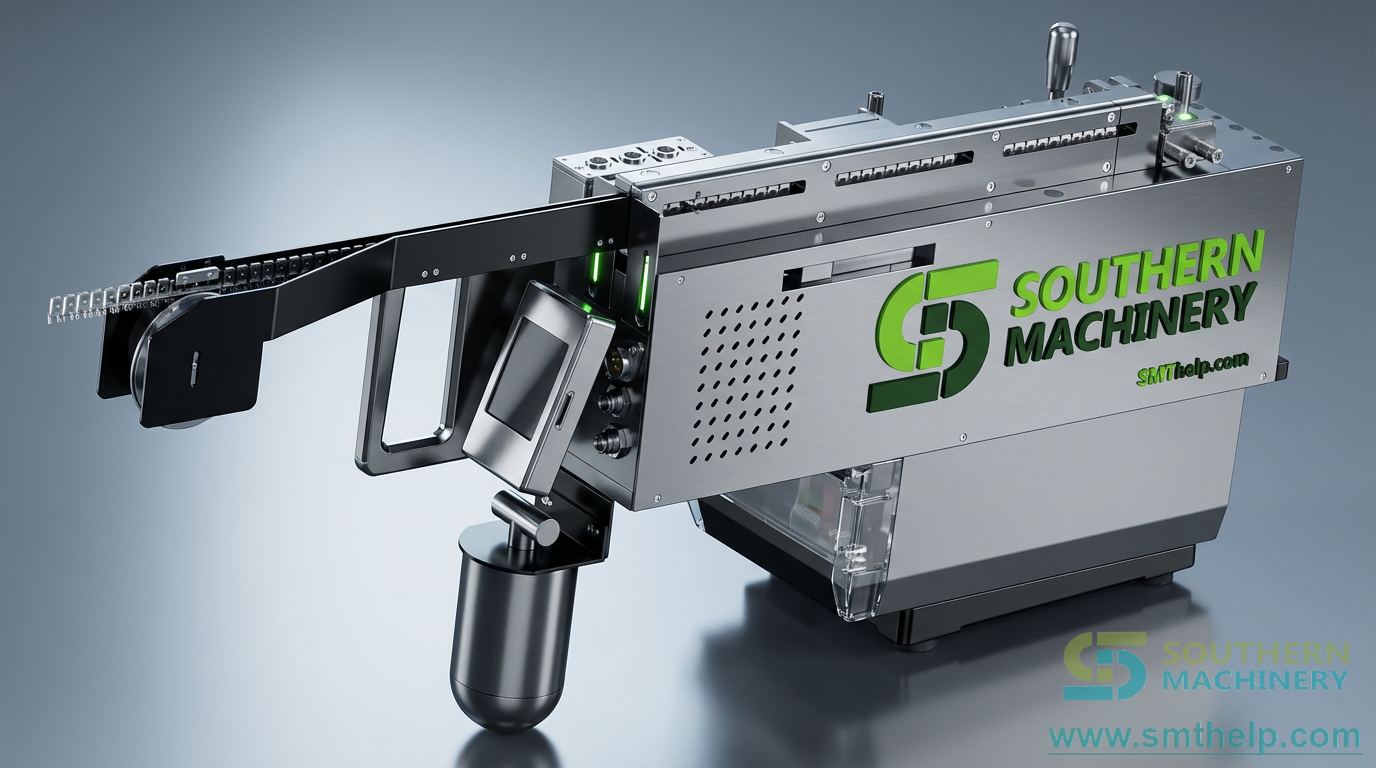
Stabilize Your Pick Point to Protect Throughput
A consistent pickup coordinate means the nozzle/gripper approaches the same pose every cycle—reducing mis-picks, re-picks, and the time lost to “small stops” that quietly degrade OEE.

Automate odd-form component handling and terminal insertion with the SRT7001 Reel Terminal Feeder. Keep a stable pickup coordinate, reduce operator dependency, and synchronize feeding with SCARA/6-axis robots and SMT mounters—without turning your line into an integration project.
You’re not buying “a feeder.” You’re buying repeatability—the ability to hold a pickup pose and pitch timing stable enough that robotics and SMT can share a common process definition.
Rotate, zoom, and inspect the mechanical layout to evaluate approach clearance, drive placement, and the presentation zone that matters most: the pick interface where robots and SMT heads need repeatable access.
Tip for engineering review: validate the pickup window clearance for your end-effector envelope (nozzle or gripper), then trace the tape path backward to confirm disturbance isolation and guide constraint near the index zone.
Watch the demo to understand the real production value: stable presentation, predictable pick timing, and a workflow that scales without relying on “expert operators.”
In hybrid SMT + odd-form workflows, the hidden cost is variability: inconsistent pickup pose, re-teach time, micro-stops, and operator-dependent threading. The SRT7001 is engineered to reduce those failure modes and standardize your cell behavior.
A consistent pickup coordinate means the nozzle/gripper approaches the same pose every cycle—reducing mis-picks, re-picks, and the time lost to “small stops” that quietly degrade OEE.
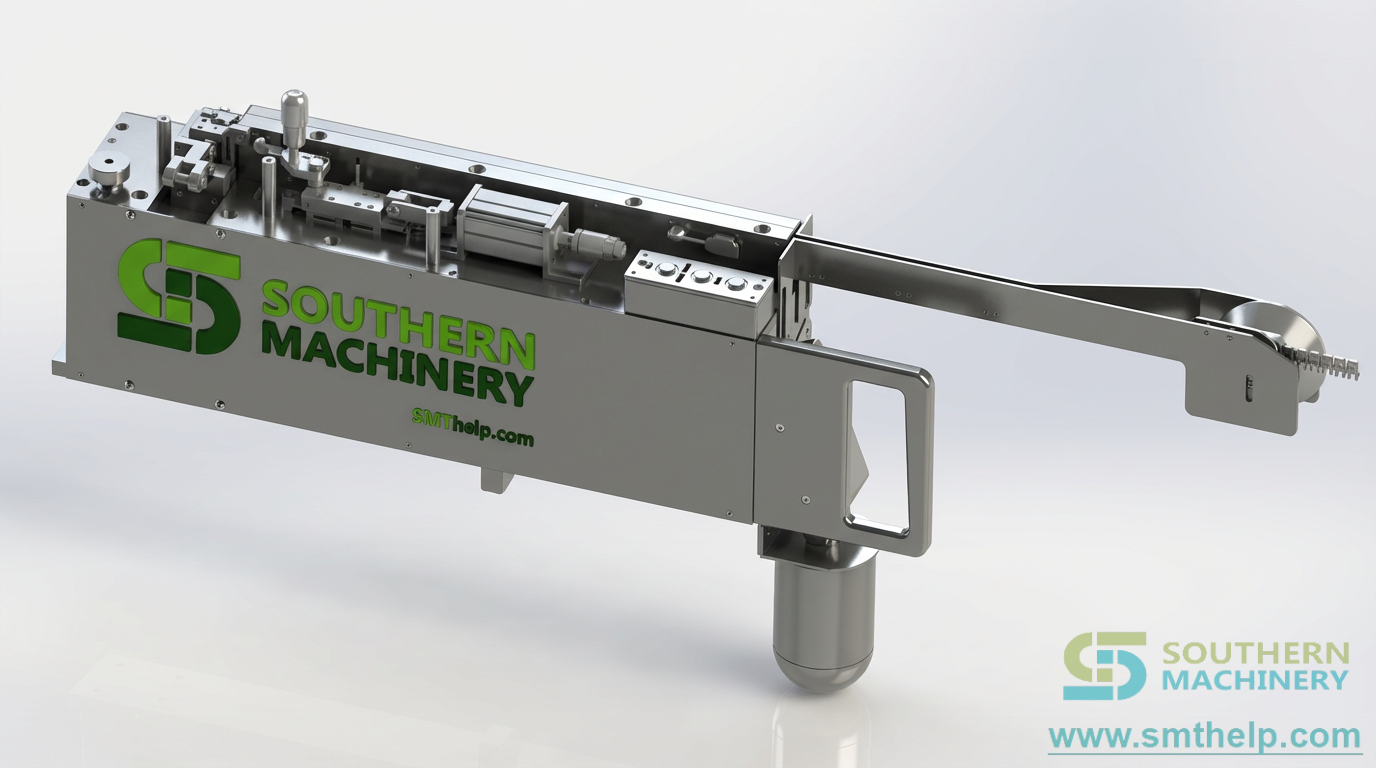
The mechanical layout is designed for automation access—supporting robotic reach envelopes while keeping the feeder footprint practical for line-side deployment and fast changeovers.

Replace manual preparation steps with a repeatable feeder-driven workflow: consistent presentation, easier offline kitting, and more predictable synchronization with your robot and line control logic.
Standardize setup into a repeatable threading + verification routine, reducing reliance on tribal knowledge and making multi-shift production more stable.
When the feeder delivers stable presentation, your robot insertion logic becomes simpler: less correction, fewer exceptions, and higher confidence during continuous runs.
When SMT and robotic stations run different assumptions, changeovers and debugging explode. SRT7001 is designed to help you run a unified workflow: deterministic presentation for SMT-style picking, plus clearance and robustness for robotic handling and insertion.
Converting manual odd-form handling into a feeder-driven process reduces the variability that causes scrap, rework, and unpredictable cycle times—especially in high-mix EMS environments.
The fastest automation projects are the ones that behave deterministically. When presentation is stable, you spend less time tuning vision compensation, less time dealing with exceptions, and more time producing.
For engineering buyers, the fastest path is aligning on your component format, end-effector type (nozzle vs gripper), and the mechanical access constraints of your cell. We’ll help you map the feeder into a stable, repeatable production workflow.
Prefer self-service first? Download the catalog and shortlist the feeder/nozzle configuration that matches your application.
Use the fixed menu to jump between the 3D model, the demo video, and the product value grid—built for fast engineering review.